
Loading...

Skip to main content
Web Design & Dev

API-First Web Development: Connecting Corporate Websites to ERPs, CRMs, WhatsApp & Custom Business Backends (2026)

SRIT Creations Logo
SRIT Integration Lab Principal API & Middleware Architect
10 min read
API-First Web Development: Connecting Corporate Websites to ERPs, CRMs, WhatsApp & Custom Business Backends (2026) - SRIT Creations
Topics: #API-First Web Dev #ERP Integration #CRM Webhooks #Microservices #Middleware Architecture #WhatsApp API #Enterprise Integration #SRIT Creations

Key Takeaways & Executive Summary

In 2026, an isolated website that simply sits on the internet is an obsolete silo. High-performing enterprises build API-first web platforms that communicate bi-directionally with core ERPs (SAP, Tally, MoveCargo360), CRMs (Salesforce, HubSpot), WhatsApp AI bots, and payment rails in real time. Here is how modern API architecture unifies your business.

Target Industry: /services
Architecture: Cloud-Native, High Availability
Implementation: 2-4 Week Rapid Deployment
Code Ownership: 100% Full IP & Source Code

Table of Contents

Quick Navigation

For many companies, the corporate website operates on an isolated digital island: customer quote requests sit in email inboxes, product stock is updated manually, and customer service teams re-type website orders into internal ERP accounting systems. This manual double-entry creates operational bottlenecks, delayed sales responses, and costly clerical errors.

Why Do This: Complete End-to-End Operational Automation

When a high-value customer requests a proposal or places an order on your website, every second counts. Automating the flow of data from web forms straight into your sales CRM and dispatch ERP slashes response times from 24 hours to 30 seconds.

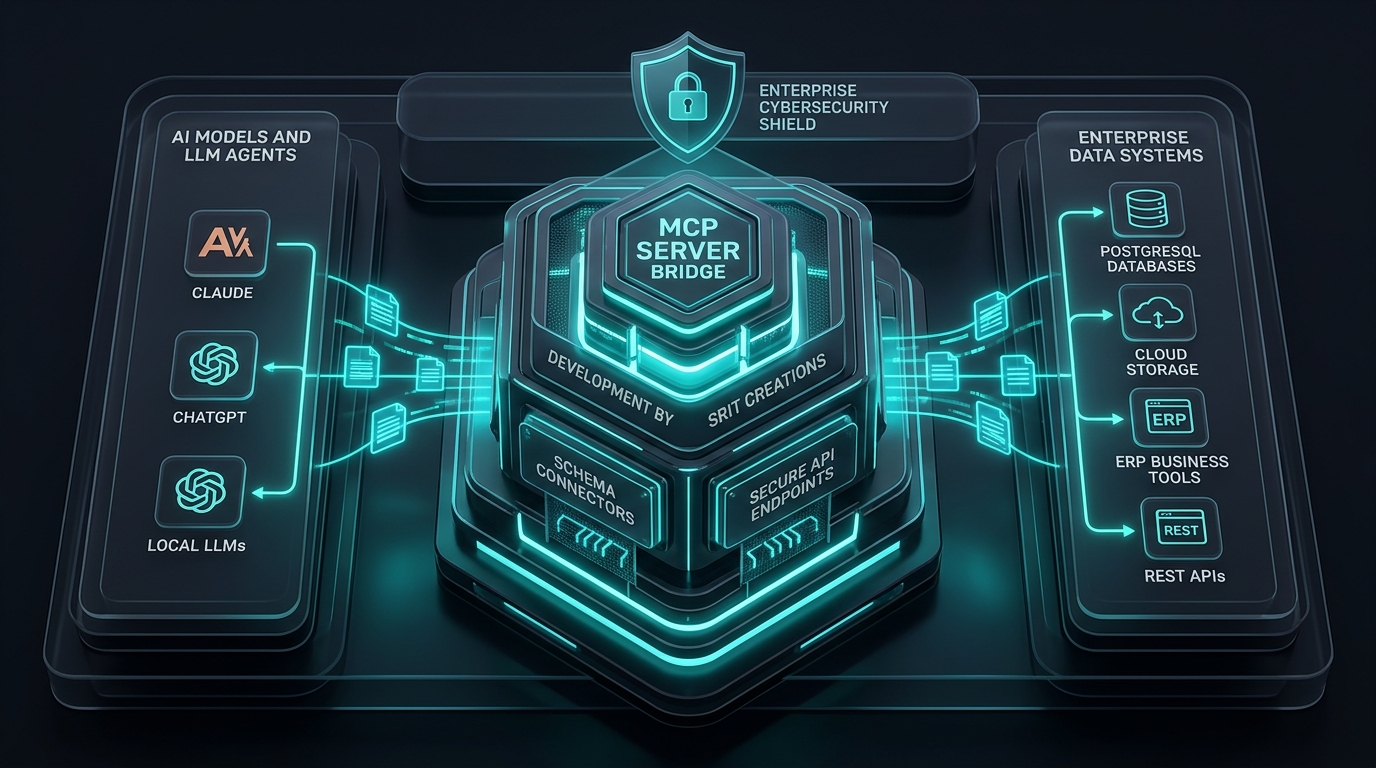
Deploying an API-First Web Architecture bridges your public web presence with your private core backends—enabling automated inventory sync, live pricing calculators, instant WhatsApp notifications, and unified customer accounts.

Why Choose SRIT Creations for API-First Web Engineering

  • High-Speed REST & GraphQL Endpoints: Built on .NET 10 Web API and Python FastAPI for microsecond response times.
  • Native ERP & Accounting Connectors: Direct bi-directional synchronization with SAP, Tally Prime, SRSyncoreERP, and MoveCargo360.
  • Asynchronous Message Queues: Fault-tolerant background processing preventing website freezing during ERP maintenance.
  • Enterprise API Security: OAuth2, JWT token rotation, rate-limiting, and encrypted payload signatures.

Connect Your Website to Your Core Business Systems

Consult with our enterprise integration and API architects to unify your operational workflows.

Book API Integration Consultation

Frequently Asked Questions

What is the primary advantage of an API-first web development approach?

An API-first approach decouples your frontend user experience from backend business logic. This allows your website, mobile app, partner portals, and AI agents to share the exact same secure business APIs, ensuring that pricing changes, inventory updates, and customer records stay 100% consistent across all channels.

Can our website automatically create sales leads in Salesforce or Zoho CRM?

Yes. Instant webhook triggers push form submissions, meeting bookings, and visitor intent scores directly into your CRM with automatic lead scoring and immediate sales rep assignment.

How does the architecture prevent website slowdowns when external ERPs are slow?

We deploy asynchronous message queues (RabbitMQ/Redis) and high-speed caching layers. If your internal ERP takes 5 seconds to process an order, the website responds to the customer in 100ms and processes the ERP sync reliably in the background.

Related Engineering Services & Core Solutions

Connect with our specialized technology practices and production-ready enterprise platforms:

Local Hub: Bhubaneswar, Odisha

SRIT Creations — Bhubaneswar Headquarters & Innovation Lab

Delivering mission-critical enterprise ERPs, school management systems, AI solutions, and logistics automation for businesses across Bhubaneswar, Odisha and India.

Plot No. 124, Saheed Nagar / Infocity Tech Zone, Bhubaneswar, Odisha 751007

WhatsApp/Call+91 7873180398

info@sritcreations.com

Odisha Tech Pod

Bhubaneswar Delivery Center

Infocity & Saheed Nagar Tech Zone, Bhubaneswar

Build Your Solution with SRIT Creations

Speak directly with our senior software architects. Get custom workflow planning, transparent pricing, and rapid on-ground deployment.

Local Service Hubs & Global Delivery Corridors

Explore our localized software development, enterprise ERP deployments, and digital transformation hubs:

Find Nearest Hub
Global Delivery & Outsourcing Pods:
🇺🇸 United States (EST/PST)
🇨🇦 Canada (Toronto)
🇬🇧 United Kingdom (GMT)
🇦🇪 UAE & Dubai (GST)
🇸🇦 Saudi Arabia (AST)
🇦🇺 Australia (AEST)

Related Industry Guides

Deep-dive architectural patterns and business guides in Web Design & Dev:

Explore All 85 Articles
Headless CMS Architecture in 2026: Pairing Strapi & Sanity with Next.js App Router for Marketing Autonomy
Web Design & Dev

Headless CMS Architecture in 2026: Pairing Strapi & Sanity with Next.js App Router for Marketing Autonomy

Marketing teams hate waiting on developers to change landing page copy, while developers hate fragile WordPress themes. Headless CMS architecture decouples content authoring (in Strapi or Sanity) from high-speed frontend rendering (in Next.js), delivering the best of both worlds.

Serverless vs Dedicated Cloud VPS in 2026: Cost, Cold Starts & Performance Benchmark Guide
Web Design & Dev

Serverless vs Dedicated Cloud VPS in 2026: Cost, Cold Starts & Performance Benchmark Guide

Serverless computing promises zero maintenance and infinite scaling, but at scale, serverless invocations and managed database bandwidth fees explode cloud bills by 300% to 500%. Here is a transparent cost and performance benchmark comparing Serverless against Dockerized Dedicated VPS hosting.

Micro-Frontend Architecture for Enterprise Web Apps: Module Federation & Independent Deployments (2026)
Web Design & Dev

Micro-Frontend Architecture for Enterprise Web Apps: Module Federation & Independent Deployments (2026)

When engineering teams grow beyond 30 developers, monolithic frontend codebases turn into deployment bottlenecks with endless git merge conflicts and hours-long build pipelines. Learn how Micro-Frontend architecture and Module Federation allow autonomous squads to build, test, and ship features independently.

Call Us WhatsApp Us